RESEARCH
COFFEE RESEARCH IN INDIA
India is one of the few countries in the world that have initiated research efforts in
coffee with an objective of providing technical guidance to the planting community. The
United planters Association of South India (UPASI) established in 1892 took first major
step in organizing research efforts to tackle various pests and diseases afflicting the
coffee plantations. Later, Dr.L.C.Coleman, the Director of Agriculture in the erstwhile
Mysore government, in a major visionary effort established an exclusive research
station for coffee namely the Mysore Coffee Experimental Station near Balehonnur in
Chikmagalur district of Karnataka in the year 1925, with primary objectives of breeding
resistant varieties and to evolve control measures against pests and diseases.
Dr.M.K.Venkata Rao, a Mycologist was the first Research Officer in-charge of the
Experimental Station and was responsible for collection of leaf disease resistant arabica
material from different areas between 1925-31. The pioneering studies of
Mr.W.W.Mayne, the Coffee Scientific Officer deputed by UPASI, on the existence of
physiological races of coffee leaf rust fungus and periodicity of leaf rust incidence paved
way for rationalization of Bordeaux mixture spraying on an extensive scale. His efforts
in association with Sri.K.H.Srinivasan, Asst. Director of Agriculture and
Sri.R.L.Narasimhaswamy, Plant Breeding Inspector resulted in the release of first
improved arabica selections S.288 and S.333 for planting by 1940.
|
During 1940’s, the coffee industry in India was in a desperate state due to the II
World war resulting in very low prices and ravages of pests and diseases. At this time,
the Government of India established the ‘Coffee Board’ through a
constitutional act “Coffee Act VII of 1942” under the administrative control of Ministry of
Commerce and Industry. The Board was entrusted with the responsibilities of extending support to
the coffee industry in the areas of marketing, finance, research and development.
Accordingly, the Coffee Board took over the reigns of the ‘Mysore Coffee Experiment
Station’ in the year 1946 and rechristened it as Central Coffee Research Institute. This
Institute was made as the Head Quarters of the Research Department of the Coffee
Board with a larger mandate of undertaking extensive research on coffee covering
different disciplines and dissemination of technology to the growers from time to time.
|
|
The Central Coffee Research Institute (CCRI) is a premier organization in the
frontier areas of modern coffee research which celebrated her Platinum Jubilee of
existence in the year 2000. CCRI is recognized as an institute engaged in scientific
research by the Department of Science and Technology, Government of India. Central
Coffee Research Institute is engaged in intensive and advanced coffee research in the
disciplines of Plant Breeding and Genetics, Coffee Agronomy, Soil Science &
Agricultural Chemistry, Plant Physiology, Plant Pathology, Entomology, Post Harvest
technology, Coffee Biotechnology and Coffee Quality.
Apart from the research divisions located at its main campus, an exclusive Plant
Tissue Culture & Biotechnology division established in Mysore is involved in conducting
bio-technology and molecular biology studies to supplement/ complement the
conventional breeding programs in developing high yielding, pest and disease resistant
varieties. The Quality Control Division stationed at Coffee Board’s Head Office in
Bangalore has been actively collaborating with other research disciplines in upgrading
the quality of coffee in the cup.
Around 130 scientific personnel assisted by technical staff are involved in
carrying out research. The centre is continuing its mission of pursuing a high quality
basic and applied research in chosen areas of plant breeding, molecular biology, soil
science, plant biochemistry, pest and disease related research, post harvest
technology, water pollution and other application oriented work for field application.
CCRI has well equipped modern laboratory facilities and a central library with vast
collections of books and periodicals on coffee in addition to other plantation and
agricultural crops.
Besides, there is a well established training section for coffee growers, bankers,
horticulturists, estate managers, supervisory personnel and extension officers of the
Coffee Board. The training section is recognized by UNDP and FAO to impart training
on coffee culture to foreign nationals too. So far, personnel from Ethiopia, Nepal, Sri
Lanka, Kenya, Vietnam and M/s.Nestle International, Singapore have been trained
besides Indian growers and others in the coffee chain.
|
|
In order to test the research findings emanating from the main institute at
different agro-climatic zones and also to evolve location specific technologies, regional
research stations were established in important coffee growing regions in a phased
manner. Together the network of coffee research in India represents major coffee
growing regions and their diverse agro-climatic conditions. The Regional Research
Stations have been functioning at :
(1) Chettalli, Kodagu district, Karnataka
(2) Chundale, Wayanad district, Kerala
(3) Thandigudi, Dindigul district, Tamilnadu
(4) Raghavendra Nagar, Vizag district, Andhra Pradesh and
(5) Diphu, Karbi Anglang district, Assam.
|
|
This station established during 1946 at Chettalli village in Kodagu district of
Karnataka is located in one of the major coffee growing regions of the country. The
station has a total area of 131 hectares of which 80 hectares is planted to coffee for
conducting research experiments. It has a scientific and technical staff strength of
twenty and well equipped laboratory facility to pursue research in all the major
disciplines.
|
|
Kerala is the second largest coffee producing state in the country with
predominantly robusta cultivation in small holdings. In order to develop appropriate
technologies for robusta suitable for this region, a regional research station was
established during 1977-78 in an area of 166 hectares near Chundale village in
Wayanad district of Kerala. The station has 30 hectares of coffee research farm, 15
scientific and technical staff and adequate laboratory facilities to pursue research in
various disciplines.
|
|
The coffee areas in Tamil Nadu come under the North-East monsoon influence
with low rainfall and hence require separate set of package for cultivation. Realising the
importance of the region as a substantial contributor of arabica coffee, a regional station
was established in an area of 12.5 hectares near Thandigudi village in Pulney hills of
Tamil Nadu. The station has a research farm of 6.5 hectares, 10 scientific and technical
personnel and good laboratory facilities for pursuing research activities.
|
|
The tribal areas in the Eastern Ghats of Andhra Pradesh and Odisha constitute
the major non-traditional areas for coffee cultivation. Coffee was introduced in these
areas mainly to develop green forest cover in the barren hills affected by the
destructive ‘Podu’ cultivation of the native tribes and to help in their socio-economic
development. A regional station was established during 1976 near Chintapalli village in
Visakhapatnam district of Andhra Pradesh with the main mandate of developing
appropriate production technology for coffee in these areas. The station has 10
scientific and technical personnel and adequate laboratory infrastructure with about 60
hectares of coffee farm for research purposes.
|
|
Coffee was introduced in the forest hills of North-East region of the country
during 1950s mainly to protect the fragile ecosystem of the region by weaning away the
native tribals from the age old practice of shifting (Jhum) cultivation and to provide them
with gainful employment. A regional station was established during 1985 near Diphu in
Assam state in an area of 25 hectares to develop suitable production technology for
coffee in the region.
|
|
List of Quality Testing Services - Coffee Quality Division - (TIES)
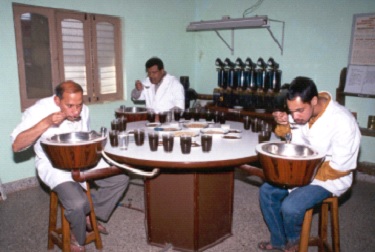
• Cup Quality evaluation and related research to improve coffee quality
• Standardization of analytical methods for the estimation of residues and other contaminants in coffee
• Setting up/ revision of standards on coffee quality parameters
• Conducting Coffee Shastra training programme on roasting, brewing, packaging, retailing and coffee quality assessment.
• Conducting one year PG Diploma in Coffee Quality Management
• Conducting Flavour of India –The Fine Cup Award competition to select finest quality coffee
|
List of Quality Testing Services - Coffee Quality Division - (TIES)
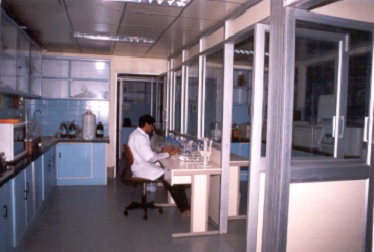
Quality of food products has gained great significance in the liberalized trade environment under the WTO regime. In this era, quality has two distinct meanings viz., quality in terms of food value or taste and quality in terms of safety to human health. The Sanitary and Phyto Sanitary (SPS) Agreement under the WTO primarily addresses the quality issues concerning health aspects such as macro cleanliness, mycotoxins, pesticide residues, heavy metal contamination etc. The trade especially in the export oriented commodities like coffee will to be subjected to these conditions in the coming years. Realizing the importance of SPS measures in coffee trade, Analytical Laboratory was established by Coffee Board in 2001 under an international project titled
Facilities Available at the Analytical Laboratory
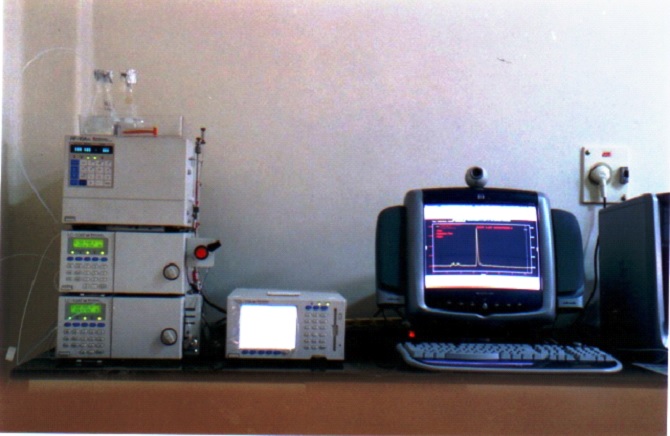
The analytical laboratory is equipped with instruments like HPLC (Shimadzu & Waters makes for estimation of Ochratoxin-A & Caffeine content), Gas Chromatography (Aglient Technologies) for Pesticide Residues Analysis, Millipore Water Purification Unit, Imported Spectrophotometer, Imported Ovens, Imported Incubator, Imported Rotary Evaporators, Imported Sample Mills, Imported De-freezer, Imported Sample Blender, Imported Centrifuge, Imported Shakers, Imported Moisture Meter (SINAR Technology, England) and other instruments like Autoclave, pH meter and Sonicator.
Analytical Services Offered to Coffee Industry
The Analytical Laboratory is offering the following analytical services to the planters, exporters and traders and research organizations on charging system. The payment may be made in the form of crossed Demand Draft/Local Cheque drawn in favour of “COFFEE BOARD GENERAL FUND ACCOUNT NO: 54044620308” and the same may be sent to the following address:
Head, Division Quality Control
Analytical Laboratory, COFFEE BOARD,
NO.1 Dr. AMBEDKAR VEEDHI, BANGALORE – 560 001.
Ph. No. 080-222 666 88. Fax No. +91-80-222 55557
E-mail: analabshancb[at]gmail[dot]com (or) hdqccoffeeboard[at]gmail[dot]com
Analytical Laboratory
Coffee Board Lab -Pesticide Residue Analysis
NABL Accredited Laboratories- Pesticide Residue Analysis
|
|
India is one among the few growing countries cultivating coffee under mixed
canopy of shade preserving the natural fauna and flora to a great extent. Nearly, 250
different types of shade trees mostly belonging to leguminous and other evergreen
species are found in coffee plantations in India. Besides, cultivation of intercrops like
pepper, orange and other companion crops like arecanut, cardamom, vanilla etc. is a
common practice in coffee plantations. These diverse conditions pose a special
challenge to the scientists to develop appropriate technologies for field adoption.
• Released 16 (13 Arabica & 3 Robusta) high yielding, disease tolerant and widely
adaptable strains for commercial cultivation.
• Chandragiri Arabica variety released during 2007 has been found to exhibit
tolerance to all the known races of coffee leaf rust pathogen besides having high
yield and high percentage of (more than 80%) of A grade beans.
• Standardized micro propagation technology for coffee
• Standardized the agro-techniques for nursery management, soil & water
conservation, plant training & pruning, irrigation management (sprinkler/drip),
weed management etc. for achieving high productivity
• Package of practices for production of organic coffee
• Recommendations on coffee based cropping systems for promoting sustainable
production systems
• Developed Integrated nutrient management package and soil and leaf analysis
based advisory service on fertilizer application
• Evolved drought tolerance indices and strategies for inducing drought tolerance
• Development of Integrated Pest & Disease Management (IPDM) packages for
management of major pests and disease of coffee
• Popularization of eco-friendly pest management package through use of natural
enemies/pheromones/Kairomones
• Standardization of wet method & dry method of processing of coffee at estate
level along with eco-friendly management of coffee processing effluent
|
|
Development of sound technologies requires multi disciplinary, inter institutional
co-operation between the research institutes/ organizations. The Central Coffee
Research Institute is actively pursuing collaboration with various institutions both at
National and International level.
|
|
• Natural Resources Institute, Greenwich University, United Kingdom
• CIRAD, Montpellier, France
• IRD, Montpellier, France
• CABI, Biosciences, U.K
• University of Trieste, Italy
• CIFC, Portugal
• Coffee Research Foundation, Kenya
• Food and Agricultural Organization (FAO), Rome
•International Coffee Organization (ICO) & Common Fund for
Commodities(CFC)
• International Coffee Genome Network, France
|
|
• Department Of Bio-Technology (DBT), New Delhi)
• Central Food Technological Research Institute (CFTRI), Mysore
• Centre for Cellular & Molecular Biology (CCMB), Hyderabad
• ICAR Institutions and Agricultural Universities
• Institute of Wood Science and Technology, Bangalore
• Indian Institute of Science, Bangalore
• Madurai Kamaraj University, Madurai
CCRI has been recognized as a centre for carrying out advanced research and
research leading to Ph.D degrees of the following Universities.
• University of Agricultural Sciences, GKVK, Bangalore
• University of Agricultural Sciences, Dharwad
• University of Mysore, Mysore
• Kuvempu University, Shankargatta, Shimoga
• Mangalore University, Mangalore
• Calicut University, Calicut
|
|
1. Collaborative research programme on “Pathology and improvement of coffee for
the main diseases” (1990-1994) – involving CIFC, Portugal; CCRI, India; Coffee
Research Station, Malawi and School of Biological Sciences, Norwich, United
Kingdom.
2. “Development of sex Pheromone system for the control of Coffee White Stem Borer
– (1996 -1998) implemented by Natural Resource Institute, University of Greenwich,
U.K and CCRI, India
3. Indo-French collaborative project on the development of Bt genes for coffee 1995-
1998
4. Multi country ICO-CFC project on “Integrated Management of Coffee Berry Borer”
5. 1998-2001 implemented by CABI-Bioscience, London in seven coffee producing
countries viz., India, Colombia, Mexico, Ecuador, Guatemala, Honduras and
Jamaica
6. ICO/CFC/FAO Multi Country Global project on “Enhancement of Coffee quality
through prevention of Mould formation - 2000-2005” implemented by FAO, Rome
in six coffee producing countries viz., India, Indonesia, Brazil, Colombia; Ivory Coast,
Uganda.
7.ICO-CFC Project on Diversification in Coffee Producing Countries-2006-07
implemented by Natural Resources Institute, University of Greenwich, UK in seven
producing countries viz., India, Kenya, Zimbabwe, Uganda, Costa Rica, Brazil,
Guatemala.
8. Multi country ICO-CFC project on “Integrated stem borer management in
smallholder coffee farms in India, Malawi and Zimbabwe- 2002-2007” implemented
by CABI Bioscience, London
9. “Coffee Agro-forestry Network (CAFNET) – connecting, enhancing and sustaining
environmental services and market values of coffee agro-forestry in Central
America, East Africa and India-2004-07” implemented by CIRAD, France and funded
by the European Union.
10.“ICO-CFC Multi country collaborative project on Coffee Leaf Rust – 2008-12” being
implemented by CABI Africa in four countries viz., India, Kenya, Zimbabwe and
Malawi.
|
|
1. Multi-institutional Network programme on “Biotechnological Approaches for Coffee
Improvement” 1999- 2004 sponsored by DBT, New Delhi involving CCRI; CCMB,
Hyderabad; CFTRI, Mysore; MKU, Madurai; UAS, Bangalore and IISc, Bangalore
2. Multi-institutional Network programme on “Indian Coffee Genome Research
programme - 2007-2010 - sponsored by DBT, New Delhi involving CCRI; CCMB,
Hyderabad; CFTRI, Mysore; MKU, Madurai and UAS, Bangalore.
3. “Production and promotion of Neem Based pesticides as environment friendly,
Biodegradable alternative to Chemical pesticides” 2007-2009 funded by Ministry of
Chemicals and Fertilizers
4. Development of Arabica plants resistant to White Stem Borer - A DBT sponsored
multi institutional bio-technology project -2010-2013.
|
|
Updated Notification on Introduction of Charges under the Charging System for the Services rendered by the Research Department of the Coffee Board to the Coffee Industry
The CCRI and all it’s Regional Stations are involved offering the following
services support for the benefit of planting community.
• Training of estate personnel at managerial and supervisory cadres on improved
coffee cultivation.
• Production and supply of planting material (seeds/clones/grafts) of improved
varieties.
• Analytical and advisory services on soil amendments, nutrient management and
quality testing of inputs used in nutrition and plant protection.
• Multiplication and supply of bio control agents against pests and diseases.
• Field visits and advisory to solve field problems.
• Estate adoption on charging system for improving the productivity of plantations.
|
|
• Coffee Guide –a reference hand book for coffee growers
• Journal of Coffee Research – an exclusive scientific journal for coffee
• Annual Technical Reports – on progress of research
• Technical Bulletins – on specific topics
• Extension Folders/ Leaflets – on all aspects of coffee cultivation for circulation
among the growers
• Occasional publications like Compendia, Bibliography etc.
|
|
Copyright © 2014. All Rights Reserved by Coffee Board of India
|